5 Deadly Generator Wiring Mistakes in Lahore Every Homeowner Must Avoid
- Tahmur Rajpoot
- 10 hours ago
- 8 min read

Avoid These Mistakes: Tips from a Generator Electrician Lahore
During long power cuts, it is tempting to “just make it work”. Someone connects a cable directly, bypasses the proper switch, uses whatever wire is available, or runs the generator in a covered corner to reduce noise. These shortcuts can cause electric shock, fire, damaged appliances, carbon monoxide poisoning, and danger for utility workers repairing the line outside
Common Generator Wiring Mistakes by Generator Electricians in Lahore
.
This guide explains the five generator wiring mistakes that every homeowner in Lahore should avoid. It is written for everyday home safety, not DIY repair. Generator wiring should always be checked by a qualified electrician who understands local supply, load requirements, earthing, breakers, and changeover installation.

1. Backfeeding the generator into the main line
Backfeeding is one of the most dangerous generator wiring mistakes. It happens when a generator is connected directly to the home’s main supply line without a proper changeover switch or transfer system.
At first, it may look like a clever shortcut. The generator starts, the house gets power, and everything seems normal. The hidden danger is that electricity can travel backwards from the generator into the external utility line.
That line may be under repair. A LESCO or WAPDA line worker may believe the line is dead, then receive a deadly electric shock from a privately connected generator.
Backfeeding can also damage your own appliances when grid power returns. If the generator and mains supply meet each other, the result can be a severe electrical fault, burnt wiring, damaged breakers, or fire.
The safe solution is an approved changeover switch. This switch separates the generator supply from the main supply. It allows your home to receive power from only one source at a time.
A proper changeover setup should:
Disconnect the main supply before the generator supply enters the house
Prevent generator power from going back into the utility line
Match the generator load and cable size
Use correct breakers and protection
Be installed in a dry, accessible, and secure location
Manual changeover switches are common in homes. Automatic transfer switches may be used where required, but they must still be installed correctly. The point is simple: never connect a generator directly to the main line.
If a generator can energise the outside utility line, the wiring is unsafe.
A qualified electrician should inspect the existing distribution board before installing a changeover. Older Lahore homes often have mixed wiring, overloaded circuits, and improvised connections. A changeover switch only works safely when the rest of the wiring is also in acceptable condition.

2. Using weak or undersized wires
Generator wiring is not the place to save money with thin cable. Undersized wire heats up when the load is too high. Heat damages insulation. Damaged insulation can lead to short circuits, sparks, and fire.
A common mistake is connecting a 5 kW generator through a cable that was never meant to carry that load. The lights may turn on, but the wire may be heating inside the wall or conduit. By the time someone smells burning plastic, the damage may already be serious.
Wire size depends on several things:
Generator capacity
Total connected load
Cable length
Copper quality
Breaker rating
Installation method
Whether the load includes motors, pumps, refrigerators, or air conditioners
Many home generator setups need heavy copper cable, often 6 mm copper wire or higher, depending on the actual load and distance. The final size should not be guessed. It should be calculated.
A small generator used only for fans, lights, and a few sockets needs different wiring from a system that runs a water motor, refrigerator, microwave, or air conditioner. Motor loads are especially important because they draw a higher starting current for a short time.
A useful basic idea is:
Watts = Volts × Amps
In Pakistan, household voltage is commonly around 230 V. If the load increases, current increases too. More current means the cable and breaker must be selected properly.
Do not judge wire by appearance alone. Cheap cable may have poor copper content, thin strands, or weak insulation. It may look thick from outside but carry less current safely than a good-quality copper cable.
Warning signs of weak or overloaded wiring include:
Warm plug tops or sockets
Burning smell near the generator line
Frequent breaker tripping
Flickering lights when loads start
Discoloured switchboards
Melted insulation
Buzzing or crackling sounds
If any of these appear, switch off the generator supply and call a professional. Do not keep resetting the breaker. A breaker trips for a reason, and forcing it back on can make the fault worse.
The safe approach is to run a separate generator supply line with the correct cable size, proper conduit, suitable breaker, and secure terminations. Loose connections can heat up even when the cable size is correct.
3. Skipping proper earthing
Earthing is not optional. It is a key part of electrical safety, especially when a generator has a metal body.
Without proper earthing, the generator frame can become live if there is an internal fault, damaged insulation, or leakage current. A person touching the generator body may receive an electric shock. The risk is higher in wet areas, during rain, or when someone is barefoot.
This is a serious concern in homes where children play near the generator, domestic staff refuel it, or family members switch it on and off without understanding the danger.
Proper earthing gives fault current a safer path to the ground. It also helps protective devices operate correctly when a fault occurs. If the earthing is missing or weak, the fault may remain present and dangerous.
A safe generator earthing setup may include:
A suitable earth rod installed in the ground
Correct earth wire size
Tight and corrosion-resistant connections
Bonding of the generator frame where required
Testing to confirm earth resistance is acceptable
Connection to the home’s earthing system only where appropriate and safe
The Urdu brief mentions an 8-foot earth rod, which is commonly used in many local installations. The actual earthing method should depend on soil condition, system design, and electrician assessment. Dry soil, poor joints, rusted clamps, or broken earth wires can make earthing ineffective.
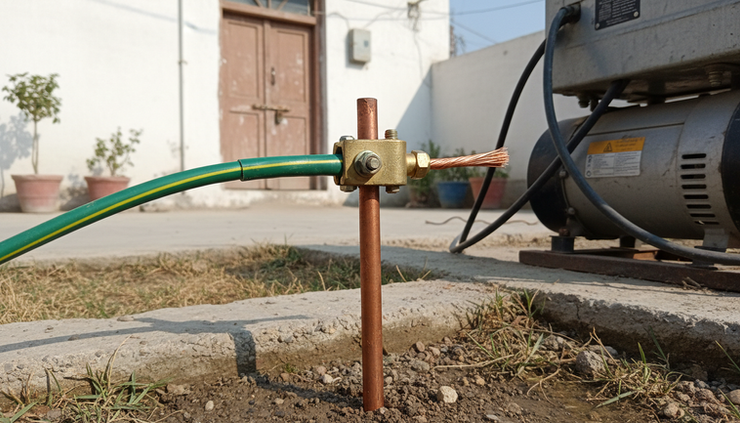
Do not rely on a random metal pipe, gate, or water line as an earth connection. That is unsafe and unreliable. A proper earth must be installed and tested.
Also, earthing alone does not make bad wiring safe. It works with the correct breaker, cable, changeover switch, and distribution system. Safety comes from the whole setup, not one part.
4. Running the generator in a closed room or covered space
This mistake is not only about wiring, but it belongs in every generator safety guide because it can be deadly.
Generators produce exhaust. That exhaust contains carbon monoxide, also called CO. Carbon monoxide is especially dangerous because it has no colour and no smell. You may not realise it is building up until someone feels dizzy, weak, confused, or unconscious.
A generator should never run:
Inside a room
In a basement
In a garage with the shutter partly closed
In a stairwell
In a covered corridor
Under a closed shed with poor airflow
Near open windows where exhaust can enter the house
Some homes place generators in side passages to reduce street exposure or noise. That may still be unsafe if air cannot move freely. Exhaust can collect and enter bedrooms, kitchens, or upper floors.
The safe solution is to place the generator in an open, well-ventilated area, away from doors, windows, and air inlets. The exhaust should face away from living spaces.
Rain protection is also important, but covering the generator must not block ventilation. A small roof or canopy may help, but it must allow exhaust to escape safely and must not trap heat.
Heat is another issue. A generator needs airflow to cool itself. If it runs in a tight corner, it may overheat, damage internal parts, or create a fire risk near stored items.
Keep the area around the generator clear. Do not store petrol, paint, cardboard, fabric, plastic containers, or cleaning chemicals next to it. Fuel should be stored safely, away from heat and sparks, and refuelling should be done only after the generator is switched off and has cooled enough to handle safely.
5. Overloading the generator
A generator has limits. Exceeding those limits damages the generator and creates electrical risk inside the home.
A common Lahore household mistake is trying to run everything during load shedding: air conditioner, fridge, water motor, microwave, iron, fans, lights, and sockets. A small generator cannot carry that load safely.
For example, a 2 kW generator should not be expected to run an AC, refrigerator, and water pump together. Even if it starts for a moment, the overload can heat the winding, reduce voltage, damage appliances, and shorten generator life.
Overloading can also cause:
Low voltage
Flickering lights
Hot cables
Burnt sockets
Generator stalling
Appliance motor damage
Breaker trips
Increased fuel use
Higher fire risk
The better approach is to make an emergency load plan. Decide what must run during a power cut and what can stay off.
Essential loads may include:
A few fans
Selected lights
Refrigerator
Internet device
Phone charging
One water pump for limited use, if the generator is sized for it
High-load items should be controlled carefully:
Air conditioners
Electric irons
Microwave ovens
Electric kettles
Washing machines
Water motors
Geysers
Heavy power tools
A generator load chart can help, but appliance labels and actual starting current matter. Refrigerators and motors may draw more current at startup than during normal running. That is why a generator that looks sufficient on paper may still struggle in real use.
A safe setup should include labelled circuits. Instead of feeding the entire house without control, the generator should supply only selected circuits. This reduces overload risk and makes daily use easier.

A simple generator safety checklist for Lahore homes
Before the next long power cut, review the setup rather than waiting for a fault.
Use this checklist:
Safety area | What to check |
Changeover | Generator supply must not connect directly to the main line |
Cable size | Wire must match generator capacity and connected load |
Earthing | Generator body and system earthing should be proper and tested |
Breakers | Protection must be suitable for the generator circuit |
Placement | Generator must run in open air, not inside or in a closed passage |
Load control | Only essential appliances should run on generator power |
Connections | Plugs, sockets, and terminals should not be loose or heated |
Fuel safety | Petrol or diesel should stay away from heat and sparks |
If the system has never been inspected, do not assume it is safe because it has “worked for years”. Faults often build slowly. Heat, loose terminals, moisture, dust, rust, and overloading all weaken an installation over time.
When to call a professional electrician
Call a qualified generator electrician if any of these apply:
The generator is connected without a changeover switch
The same plug powers the house from the generator
Wires feel warm during use
Breakers trip often
Lights dim heavily when the fridge or motor starts
The generator body gives a shock or tingling feeling
The setup has no visible earthing
The generator runs near living spaces
You are upgrading to a bigger generator
You want to run selected circuits safely
A professional should inspect the generator rating, cable route, distribution board, earthing, breaker size, and total connected load. The goal is not only to make the generator run. The goal is to make it run safely.
Safe generator wiring is not a luxury in Lahore. It protects families, neighbours, appliances, and line workers. Avoid backfeeding, use the right cable, install proper earthing, keep the generator in open air, and control the load. One careful inspection today can prevent a dangerous accident during the next power outage.

Comments