5 Dangerous Electrical Mistakes Lahore Homeowners Should Avoid | Electrician Lahore
- Tahmur Rajpoot
- 1 day ago
- 9 min read

A light that keeps tripping is not “normal Lahore load-shedding behaviour”. A socket that feels warm is not a small inconvenience. A switchboard that sparks is not something to test again “just to check”.
Electrical faults often start quietly. A loose connection, an overloaded socket, a cheap wire hidden inside a wall, or a missing earth connection can all look harmless at first. Then one hot afternoon, the AC, fridge, geyser, microwave, and iron are running together, and the wiring finally gives up.
Lahore homes face a tough mix of heavy summer loads, older wiring, voltage fluctuation, dust, moisture, and quick repair jobs done without proper testing. The result is simple: small electrical mistakes can turn into shocks, equipment damage, burnt wiring, or fire.
Here are five dangerous mistakes Lahore homeowners should avoid, and when it is time to call a professional electrician instead of guessing.
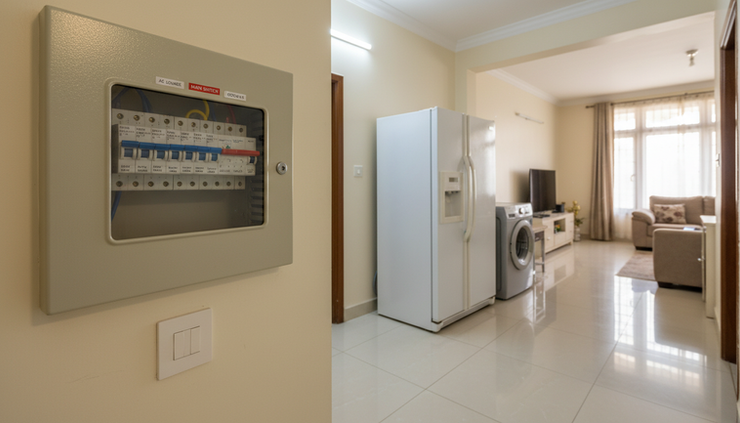
1. Overloading one socket can heat wires behind the wall
One of the most common electrical mistakes is running too many heavy appliances from one socket or extension board.
It usually starts with convenience. The AC plug is nearby, the fridge is already connected, and someone adds a geyser, iron, heater, or microwave through a multi-plug. The appliance runs, so everyone assumes the setup is fine.
That is a dangerous assumption.
High-load appliances draw more current than small items like mobile chargers, lamps, or fans. When several heavy appliances share the same socket, the wires, plug pins, and socket contacts can heat up. The real danger is that this heating may happen inside the wall, where no one can see it until the smell of burning plastic appears.
Common signs of an overloaded socket include:
The socket feels warm or hot to the touch
The plug becomes loose or discoloured
A burning smell comes from the switchboard
The MCB trips when two appliances run together
Lights dim when the AC or motor starts
An extension board melts, cracks, or sparks
A split AC, electric geyser, washing machine, microwave, water pump, and large refrigerator should not be treated like small plug-in devices. They need proper load planning, correct cable size, and in many cases a dedicated circuit.
The safer approach is simple: give major appliances their own properly rated socket and circuit. If the home is old, the electrician should check whether the wire size, breaker rating, and socket rating match the appliance load.
Do not solve overload problems by installing a higher-rated breaker without checking the wiring. A larger MCB may stop tripping, but the cable behind the wall may still overheat. The breaker is there to protect the wire, not to make the problem disappear.
Call an electrician if a socket heats up, turns black, sparks, or trips repeatedly. These signs should be treated as urgent.
2. Cheap wiring material can cost far more than it saves
Electrical work often becomes expensive because most of it is hidden. Once wires go inside walls, ceilings, conduits, and distribution boards, it becomes harder to inspect them. That is why using low-quality material is such a serious mistake.
Cheap wiring may look similar from the outside, but it can fail in ways that matter:
The copper content may be poor
The insulation may crack early
The cable may heat under normal load
The wire size may not match what is printed
The outer covering may not handle heat well
Connections may loosen over time
Saving money on wire, sockets, breakers, and DB accessories can feel tempting during renovation or construction. The problem is that poor material does not fail politely. It can burn, melt, trip, shock, or damage appliances.
In Lahore, this becomes even more important because homes often run heavy loads during peak summer. Multiple ACs, refrigerators, water pumps, UPS systems, and inverters may all be connected into the same household electrical system. Weak material ages faster under that pressure.
For new wiring or rewiring, ask for reliable, Pakistan-standard electrical material from a known supplier. Also ask the electrician to explain what wire size is being used for lights, sockets, ACs, geysers, and main supply lines.
A good electrician should not object to basic questions such as:
Which cable size is being used for this circuit?
Is this socket suitable for the appliance?
Is the breaker rating correct for the cable?
Is the DB properly labelled?
Are the joints inside proper boxes or hidden loosely in the wall?
The cheapest quote is not always the safest quote. Electrical work should be priced by correct material, careful installation, and proper testing, not just by how quickly someone can finish the job.

3. Missing earthing makes shocks more dangerous
Earthing is one of the most ignored parts of home wiring. Many houses have three-pin sockets, but that does not always mean the earth wire is properly connected. In some homes, the earth terminal is empty. In others, the earth connection exists but is weak, broken, corroded, or never tested.
Earthing gives fault current a safer path to the ground. If a metal appliance body becomes live due to an internal fault, proper earthing helps protective devices trip and reduces the risk of electric shock.
Without proper earthing, everyday appliances can become dangerous, especially:
Washing machines
Refrigerators
Electric geysers
Microwave ovens
Water pumps
UPS and inverter systems
Metal-bodied kitchen appliances
Outdoor lights and motors
A mild tingle from a washing machine, fridge, geyser tap, or metal appliance body should never be ignored. It may point to leakage current, poor earthing, or a wiring fault.
Bathrooms and kitchens need extra care because water lowers resistance and increases shock risk. A poorly earthed geyser or water pump can become very dangerous in wet areas.
A professional Electrician in Lahore can test earthing using proper tools, not guesswork. The check should include the earth wire, socket connections, DB earthing, appliance leakage, and the condition of the earth electrode where applicable.
For better protection, many homes also use ELCB or RCD protection, depending on the wiring setup. These devices can disconnect power when leakage current is detected. They are not a replacement for proper wiring, but they add an important layer of safety when installed correctly.
If anyone in the home feels shocks from appliances, switch off the circuit if safe to do so and call a qualified electrician. Do not keep using the appliance “carefully”. Electricity only needs one bad moment.
4. DIY switchboard repairs can turn a small fault into a full failure
A loose switch, dead socket, flickering light, or buzzing fan regulator may look like a simple fix. Many people open the switchboard after watching a short video or asking a neighbour. Some repairs work for a few days, which creates confidence.
That confidence is risky.
Household wiring is not always straightforward. A switchboard may contain phase wires, neutral wires, loop connections, fan regulator wiring, two-way switch wiring, UPS wiring, inverter supply, or old colour-coded wires that no longer match current practice. In older homes, colours may have been mixed by previous repair workers.
One wrong connection can cause:
Short circuit
Burnt switchboard
Damaged appliance
Electric shock
Melted insulation
Fire inside a concealed box
Fault spreading to another room
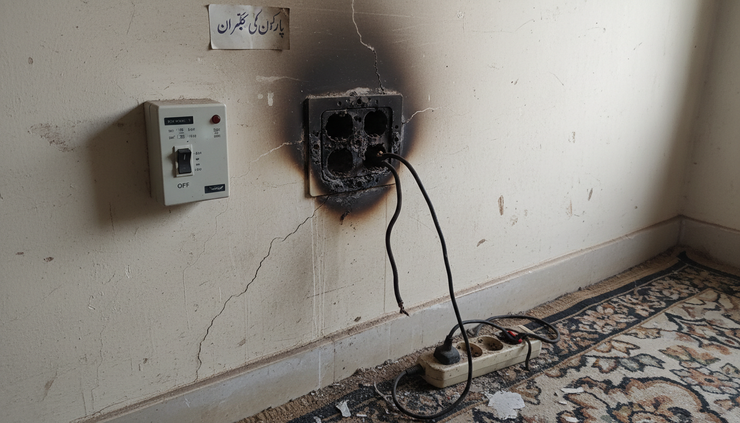
Even changing a socket can be unsafe if the circuit is still live, the neutral is shared, the wiring is loose, or the load is higher than the socket rating.
There is also a second problem: poor workmanship. Twisting wires together and covering them with tape is not the same as making a safe joint. Loose connections create heat. Heat damages insulation. Damaged insulation leads to sparks and shorts.
Call an electrician for switchboard work if:
The board sparks or makes a crackling sound
The switch feels hot
The socket is loose in the wall
The same switch burns again after replacement
There are black marks around the socket
Multiple rooms lose power together
UPS and WAPDA supply are mixed in the same board
If you must act before help arrives, keep it basic. Turn off the relevant MCB if you can identify it safely. Do not touch exposed wires. Keep children away from the area. Do not pour water on any electrical fault. If there is smoke or fire, move away and use the correct fire safety response for electrical fires.
5. Repeated MCB tripping should never be ignored
An MCB trips to protect the circuit. When it trips again and again, it is sending a message. Resetting it repeatedly without finding the fault is one of the most dangerous habits in home electrical maintenance.
Trip issues usually come from one of these problems:
Overload on the circuit
Short circuit in wiring
Faulty appliance
Loose connection
Water entering an outdoor fitting
Damaged insulation
Wrong breaker rating
Leakage current in appliance or wiring
The timing of the trip gives useful clues. If the MCB trips as soon as it is switched on, there may be a short circuit. If it trips when the AC starts, the circuit may be overloaded or the appliance may have a fault. If it trips during rain, outdoor wiring, garden lights, roof wiring, or exposed joints may be involved.
Do not replace the MCB with a stronger one just because it trips. That is like putting tape over a warning light in a car. The fault remains, but the protection becomes weaker.
A professional electrician should test the circuit step by step. They may isolate appliances, inspect wiring, check load, test insulation where needed, tighten connections, and confirm whether the breaker itself is faulty.
Repeated tripping is especially serious in homes with old wiring, multiple ACs, UPS systems, or recent renovation work. If a new appliance causes tripping, unplug it and get both the appliance and circuit checked.
A single trip after a known overload may not be a big issue. Repeated tripping is different. Treat it as a fault until proven otherwise.

When a Lahore home needs a professional electrical safety check
Some electrical jobs should not wait for a complete failure. A safety check is smart when a home has warning signs, old wiring, or new heavy appliances.
Book an inspection if any of these apply:
The wiring is more than a decade old and has never been checked
You are installing new ACs, geysers, or a heavy kitchen appliance
Switchboards feel warm
Lights flicker without a clear reason
MCBs trip often
You smell burning plastic near sockets
Extension boards are used for permanent loads
Appliances give mild shocks
The DB is not labelled
There is no known earthing system
Renovation work has recently been done
A proper safety check should cover more than “the light is working”. It should include socket condition, load distribution, breaker sizing, wire condition where visible, earthing, hot spots, loose connections, and signs of moisture or burning.
For Lahore homes, extra care is useful in areas where older houses have been extended floor by floor over many years. Each extension may have added new loads to an old system. The wiring may still work, but it may not be safe for the current demand.
What LahoreFix can check during a home visit
The brief repair is not always enough. If a socket burns, the socket needs replacement, but the reason for burning also needs attention. If an MCB trips, resetting it is not a repair. If an appliance gives shocks, the earth and leakage path must be checked.
LahoreFix’s electrician service can carry out a home safety check and help identify common risks such as overloaded circuits, weak sockets, missing earth connections, faulty breakers, and unsafe DIY wiring. Service availability may vary by area, including DHA, Gulberg, Johar Town, and Bahria Town.
A useful visit should leave you with clear answers:
What caused the fault?
Which area is unsafe?
Which repair is urgent?
Which appliance or circuit needs separate wiring?
Is the earthing working?
Is the MCB correctly rated?
What should be avoided until repair is complete?
If you contact a service provider, share the exact symptoms before the visit. Mention tripping, sparks, burning smells, shocks, affected rooms, and which appliances were running. Clear information helps the electrician arrive with the right tools and parts.

The safest repair is the one that finds the cause
Electrical safety is not about fear. It is about taking the right warning signs seriously.
A socket should not heat up. A switchboard should not spark. An appliance should not give shocks. An MCB should not trip every day. A heavy appliance should not run from a weak extension board. These are not small household annoyances. They are signals that the system needs attention.
The five mistakes to avoid are simple:
Do not overload sockets.
Do not use cheap wiring material.
Do not ignore missing or weak earthing.
Do not open switchboards without proper training.
Do not keep resetting a tripping MCB.
If any of these issues are already present in your home, switch off the affected circuit where safe and call a qualified electrician. A careful inspection today is far easier than repairing burnt wiring, damaged appliances, or a preventable accident later.
Need a Professional Electrician in Lahore?
LahoreFix کی ٹیم 60 منٹ میں آپ کے گھر پہنچ کر مکمل الیکٹریکل سیفٹی چیک کرتی ہے۔ وائرنگ، شارٹ سرکٹ، ارتھ، MCB سب کام پروفیشنل طریقے سے۔کال/واٹس ایپ: 0305-1717571سروس ایریا: DHA, Gulberg, Johar Town, Bahria Town
Comments