Bathroom Heater Rod Wiring Safety Lahore Safe Guide

A bathroom heater rod can warm water quickly, but it can also turn dangerous in seconds if the wiring is weak, loose, or unprotected. Water and electricity are a deadly mix. That is why Bathroom Heater Rod Wiring Safety Lahore is not a small repair topic. It is a life-safety issue.
In many Lahore homes, heater rods are used in winter with old sockets, thin extension wires, cracked plugs, and no proper earth protection. The rod may still heat the water, so the danger stays hidden. The real risk appears when current leaks into the bucket, tap area, wet floor, or metal body nearby.
Safe wiring means more than “the rod is working.” It means the circuit can handle the load, the socket is rated properly, the earthing is real, and an RCCB is installed to cut power quickly if leakage current is detected.
Why bathroom heater rod wiring is so risky
A heater rod draws heavy current. It is not like charging a mobile phone or switching on a small LED bulb. The rod heats water by using electrical resistance, which means the circuit must carry a strong load for several minutes.
If any part of the setup is weak, heat builds up. Heat damages insulation. Damaged insulation can expose live current. In a dry room this is already dangerous. In a bathroom, the danger becomes much higher because water reduces body resistance and allows current to pass more easily.
Common unsafe setups include:
A heater rod plugged into a normal 5A socket
Thin extension leads used near water
Loose plug pins that spark
Joints wrapped only with tape
No proper earthing
No RCCB or earth leakage breaker
Old wooden or broken switchboards
Multi-plug adaptors used for high load
A heater rod should never be treated as a casual appliance. If the plug gets hot, the socket smells burnt, the switch sparks, or the water gives even a small shock, stop using it immediately.
A small shock in a bathroom is not a warning to ignore. It is a sign that the wiring may already be unsafe.
What makes bathroom heater rod wiring safe
Safe wiring has layers of protection. No single item can fix every risk. The right approach combines load handling, insulation, earthing, and leakage protection.
Use a separate 15A socket
A heater rod should use a dedicated 15A socket fitted by a trained electrician. The socket should be fixed at a safe height and distance from splashing water. It should not hang loose, and it should not share load with other appliances.
A proper 15A point reduces the chance of overheating. It also gives the plug a firm connection, which helps prevent arcing and burning.
A safe heater rod point should have:
Correct wire size for the load
Firm socket grip
Good quality switch
Correct phase, neutral, and earth connections
No exposed copper
No loose joints behind the board
If a 15A plug has been forced into a smaller socket through an adaptor, that is not a safe solution. It only hides the problem.
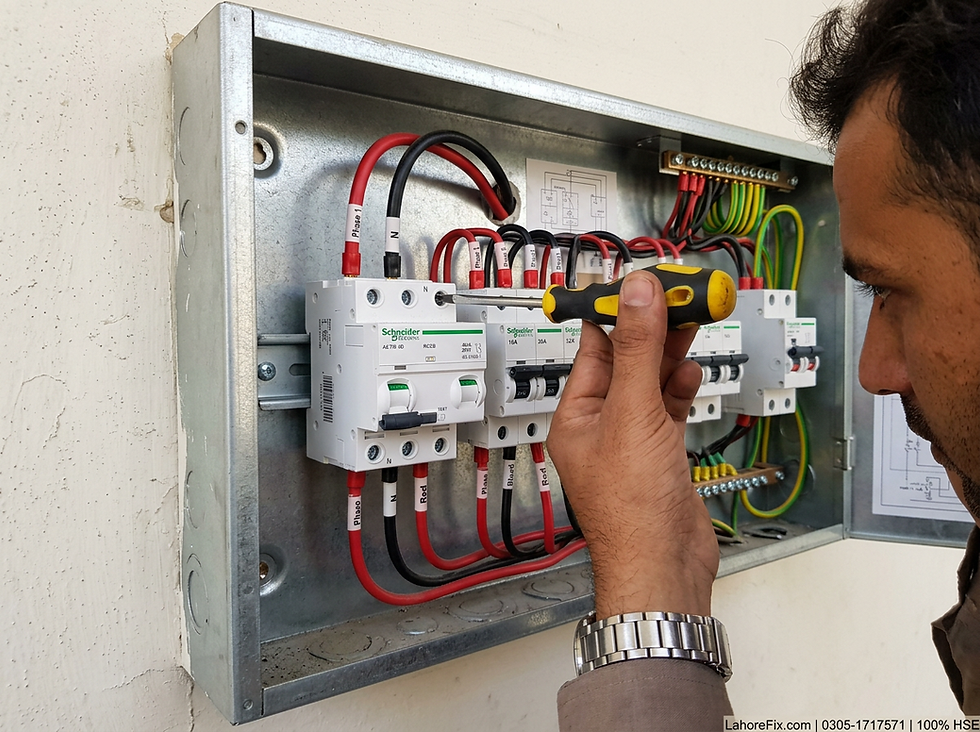
Install an RCCB or earth leakage breaker
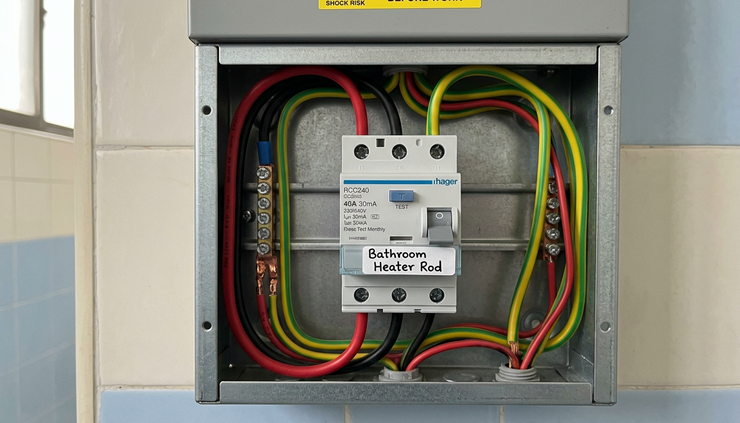
An RCCB, also called a residual current circuit breaker, detects leakage current. If current starts flowing where it should not, the RCCB trips and cuts the supply. This can reduce the risk of severe electric shock.
People in Lahore often call it an earth breaker or shock breaker. Whatever name is used, the purpose is the same: it helps disconnect power during leakage.
For bathroom heater rod wiring, RCCB protection is one of the most important safety upgrades. It should be installed correctly in the distribution board or sub-circuit, and it should be tested after installation.
Check proper earthing
Earthing gives fault current a safer path. Without proper earthing, leakage current may pass through a person touching water, a rod, or a nearby metal fitting.
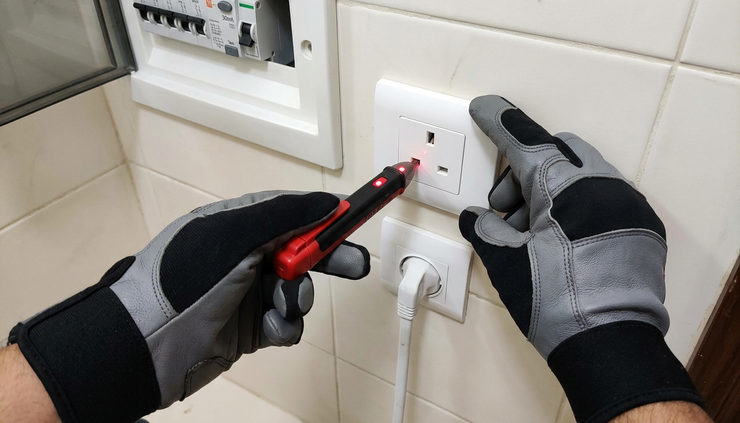
A common mistake is assuming earthing exists because there is a three-pin socket. The earth pin may be connected to nothing, or it may be connected poorly. Earthing must be tested with the right meter.
Good earthing helps protective devices work correctly. Poor earthing can make even a neat-looking installation unsafe.
Keep wiring away from water
Bathroom wiring must be planned with water movement in mind. Splashes, steam, damp walls, and wet hands all increase risk.
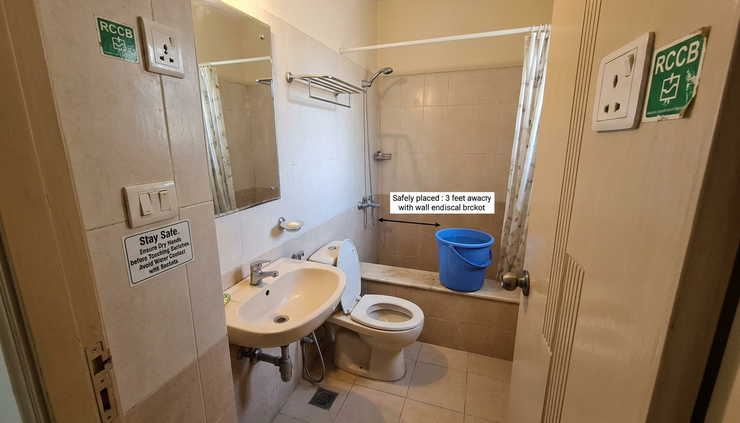
The socket should not be placed where water can splash directly on it. Extension boards should not sit on the floor. Switches should not be touched with wet hands. The heater rod cable should not pass through standing water or get trapped under a bucket.
Even a good rod can become unsafe if used carelessly in a wet area.
Warning signs that need immediate attention
Electrical problems often show small signs before a serious fault. Do not wait for a full failure if any of these appear.
Warning sign | What it may mean |
Plug or socket becomes hot | Loose contact, overload, or poor socket quality |
Burning smell | Insulation damage or overheating |
Spark when switching on | Loose wiring or weak switch |
Mild shock from water | Leakage current, unsafe rod, or poor earthing |
RCCB trips again and again | Faulty rod, leakage, or wiring issue |
Black marks near socket | Arcing or heat damage |
Rod cable feels hard or cracked | Ageing insulation |
If any of these signs appear, stop using the heater rod and get the circuit checked. Replacing only the plug may not solve the real fault.
Bathroom heater rod safety mistakes seen in Lahore homes
Many electrical accidents happen because people try to make a quick arrangement for winter. The intention is simple: heat water fast. The result can be dangerous.
One common mistake is using a long extension wire from a bedroom or corridor into the bathroom. The wire may be thin, the plug may be loose, and the extension board may sit on a wet floor. This is a serious risk.
Another mistake is joining broken rod wires by hand and covering them with tape. Tape is not a repair for high-load bathroom equipment. Moisture can enter the joint and create leakage.
People also keep using a rod after receiving a small current from the water. This should never be ignored. “Geyser rod me current” is a clear danger sign, not a normal winter problem.
Unsafe habits include:
Touching the rod while it is plugged in
Putting hands in the bucket before switching power off
Leaving the rod unattended
Using a cracked bucket with water leaking near the socket
Using a damaged rod because it still heats water
Pulling the plug with wet hands
The safest habit is simple: switch off the power first, remove the plug, then handle the rod.
The safe wiring solution for heater rods
A safer heater rod setup starts with inspection. The electrician should check the current wiring, socket rating, wire size, load, earthing, and protection at the breaker panel.
A better setup usually includes:
A separate 15A point for the heater rod
Correct gauge copper wiring
A quality 15A switch and socket
Proper earthing connection
RCCB or earth leakage breaker protection
Neat conduit or concealed wiring where suitable
Testing after installation
This work should be done by someone trained in electrical safety. A bathroom circuit is not the right place for trial-and-error repairs.
Why an RCCB matters more in bathrooms
In a normal fault, an MCB trips when current exceeds its limit. That protects wiring from overload and short circuit. An RCCB works differently. It detects leakage current, which is the type of fault that can shock a person.
For heater rods, both protections matter. The MCB protects the circuit from overload. The RCCB helps protect against leakage shock. A safe installation may need both, correctly selected and installed.
Why a separate circuit is better
A separate circuit reduces load sharing. If the heater rod shares wiring with lights, fans, or other sockets, the circuit may become overloaded. In old Lahore houses, wiring may already be ageing. Adding a high-load heater rod to a weak circuit increases risk.
A dedicated point makes the setup clearer and safer. It also makes fault-finding easier if the RCCB trips or the socket heats up.
Safe use habits after wiring is fixed
Even strong wiring needs safe use. The bathroom environment will always carry risk, so daily habits matter.
Follow these simple rules:
Keep the switch off before placing the heater rod in water.
Make sure the rod heating part is fully inside water before use.
Do not touch the water while the rod is connected to power.
Switch off and unplug before removing the rod.
Keep children away from the bathroom during heating.
Dry hands before touching the plug or switch.
Do not use the rod if the wire, plug, or handle is damaged.
Test the RCCB using its test button as advised by your electrician.
A heater rod should never be used like a casual kitchen appliance. Treat it as high-load electrical equipment.
When to call LahoreFix.com
Call a professional when the work involves wiring, RCCB installation, socket replacement, earthing, or repeated tripping. These are not cosmetic issues. They affect safety.
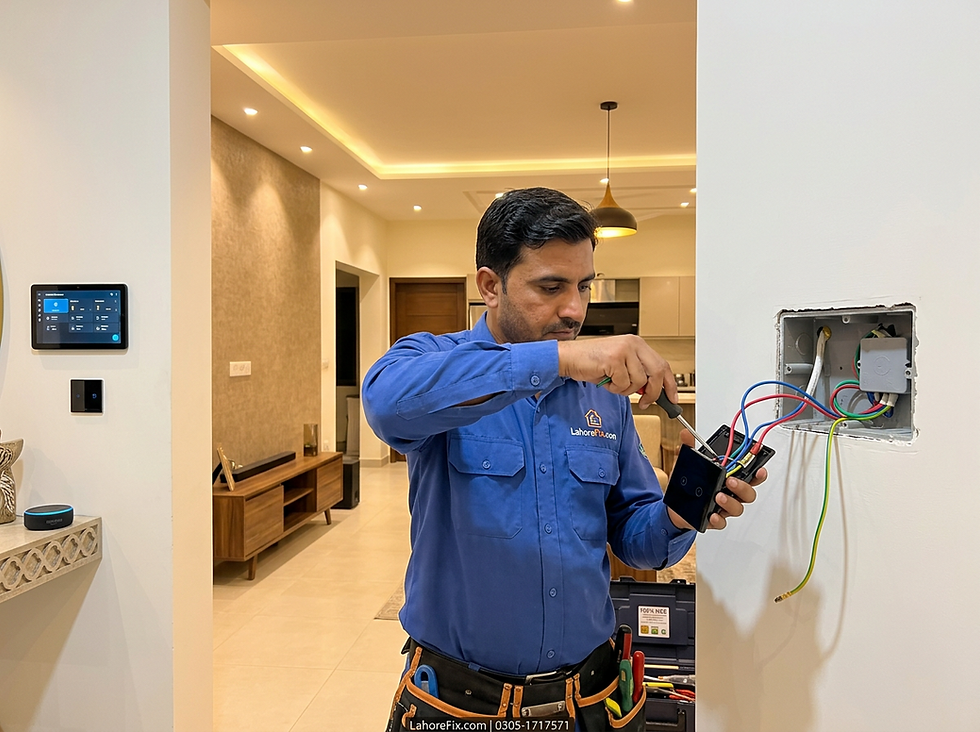
LahoreFix.com can help with safe bathroom heater rod wiring, 15A socket installation, RCCB setup, earth breaker fitting, and fault checking in Lahore. If there is current in the water, a burning smell, or a hot socket, stop using the rod and arrange inspection.
For service, call LahoreFix.com at 0305-1717571.
Final safety takeaway
A bathroom heater rod should not run on loose plugs, thin extensions, or untested wiring. The safer setup is clear: a separate 15A socket, proper earthing, correct wiring, and RCCB protection.
If the water gives current, the socket heats up, or the breaker trips, do not keep trying again. Switch it off, unplug it safely, and get the wiring checked. One proper safety upgrade can prevent a serious accident.

Comments