Washing Machine Separate Wiring Lahore Safety Guide

A washing machine looks like a simple home appliance, but it can put heavy load on a weak electrical point. In many Lahore homes, the machine is plugged into a normal board that also runs an iron, geyser switch, water motor, dryer, or extension lead. That is where trouble begins.
A warm plug, burning smell, loose socket, tripping breaker, or black marks around the board are warning signs. They often mean the wiring is not fit for the load. Separate wiring for a washing machine gives the appliance its own safe path from the distribution board to the socket. It reduces heating, improves earthing, and lowers the chance of electric shock.
For anyone searching for Washing Machine Separate Wiring Lahore, the goal should be simple: a dedicated point, correct wire size, proper earthing, suitable protection, and neat installation by a trained electrician.
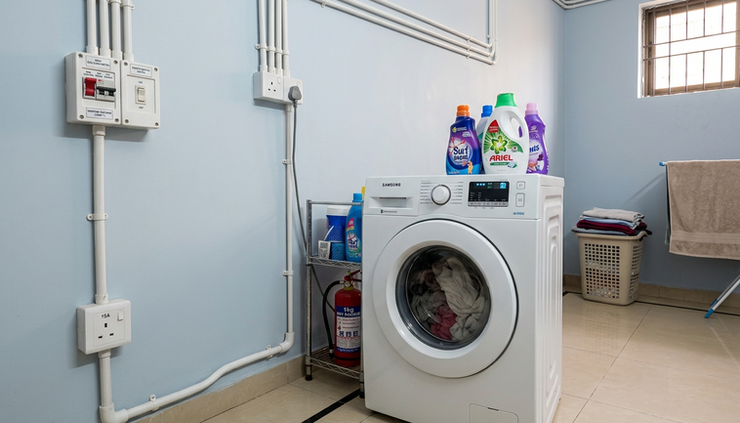
Why a normal board is risky for a washing machine
A normal switchboard is often used for light plugs, mobile chargers, fans, small kitchen items, and sometimes heavy appliances. That does not mean it can safely handle a washing machine for years.
A washing machine uses electricity in different ways during a wash cycle. The motor starts and stops. The drum spins at high speed. Water enters and drains. Some machines include heating functions. Each stage can create load changes. If the wiring, socket, plug, or breaker is weak, the point may heat up.
Common problems include:
Loose socket grip
The plug does not sit tightly, so sparking can happen inside the socket.
Thin or old wire
Undersized wiring heats up when the machine draws current.
Shared load
The same line may be carrying another heavy appliance at the same time.
Poor earthing
Fault current may not flow safely to earth, increasing shock risk.
Low quality extension boards
Many extension leads cannot safely handle heavy appliance load for long periods.
A warm board may look like a small issue, but it should not be ignored. Heat damages insulation. Damaged insulation increases the risk of short circuit. In a wet laundry area, the risk becomes more serious because water and electricity are a dangerous mix.
What separate wiring means in practical terms
Separate wiring does not mean adding another ordinary socket near the machine. It means creating a dedicated electrical point designed for the appliance.
A proper washing machine point usually includes:
A separate wire run from the main distribution board or suitable supply point
A quality socket with firm plug grip
A suitable circuit breaker or protective device
Proper earthing connection
Safe routing through conduit or pipe
Clean termination at both ends
Testing before the machine is used
The exact wire size and protection should be selected by a qualified electrician after checking the site, appliance rating, load, distance, and existing wiring condition. Guesswork is not safe.
If the socket becomes hot, the smell of burning plastic appears, or the breaker trips again and again, stop using the washing machine until the point is checked.
Separate wiring is not only about avoiding a burnt socket. It is about giving the washing machine a stable and safer connection.
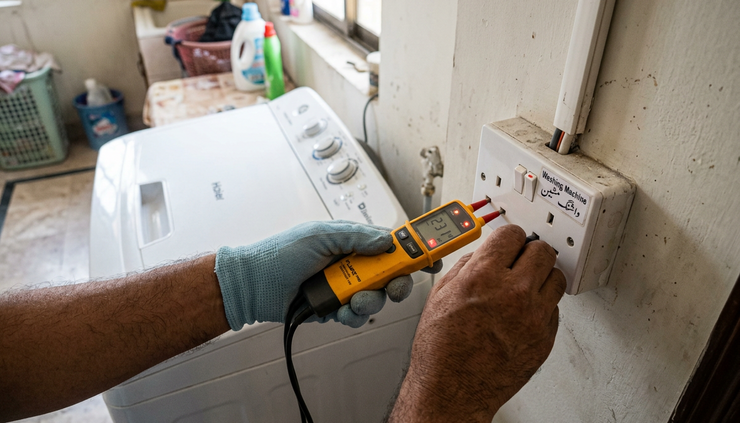
Main benefits of separate wiring for a washing machine
A dedicated washing machine point gives several practical benefits, especially in homes where the laundry area is used daily.
It reduces heating at the board
When a washing machine runs on a weak or shared point, the socket and wires can heat up. Heating usually happens because the connection is loose, the conductor is undersized, or too many appliances are sharing the same line.
Separate wiring gives the machine its own load path. A good quality socket, proper wire, and tight terminals help reduce unnecessary heat.
It helps protect against electric shock
Washing machines are metal-bodied appliances. They also work near water. That makes earthing very important.
Proper earthing gives fault current a safe path. If an internal fault occurs, protective devices can work better when earthing is correct. Without earthing, the machine body may become dangerous to touch.
This is why the wiring job should not stop at “current aa raha hai”. The electrician should also check the earth connection.
It reduces nuisance tripping
A breaker that trips repeatedly is not just annoying. It is a sign that something needs attention. The load may be too high, the wiring may be damaged, or there may be leakage current.
A dedicated circuit makes fault finding easier. If the washing machine circuit trips, the electrician can inspect that specific line instead of guessing across multiple rooms.
It protects the appliance
Bad wiring can cause voltage drop, sparking, and unstable supply. Over time, this can affect the washing machine’s motor, control board, and internal parts.
Separate wiring cannot fix every power issue in the area, but it gives the appliance a cleaner and safer connection inside the home.
It keeps the laundry area neater
Many homes use long extension leads because the washing machine is far from the nearest socket. This creates clutter and risk, especially where water may spill.
A proper dedicated point near the machine removes the need for unsafe wiring shortcuts.
Warning signs that your washing machine needs a dedicated point
Not every home has the same wiring condition. Some newer homes already have a suitable point. Many older homes do not. Look for these signs.
Warning sign | What it may mean |
Socket feels warm after use | Loose contact, undersized wire, or overload |
Plug has black marks | Sparking or overheating |
Switchboard smells burnt | Heat damage inside the board |
Breaker trips during spin cycle | Load issue, fault, or weak circuit |
Machine gives mild shock | Earthing fault or leakage |
Extension wire becomes hot | Extension is not suitable for the load |
Lights dim when machine starts | Voltage drop or shared load problem |
If any of these signs appear, avoid using the machine until the point is checked. A short delay is better than burnt wiring or electric shock.
In Lahore, many laundry areas are built in small spaces, balconies, back kitchens, or wash areas. These spaces often have moisture, floor drains, metal taps, and tiled walls. That makes safe wiring even more important.
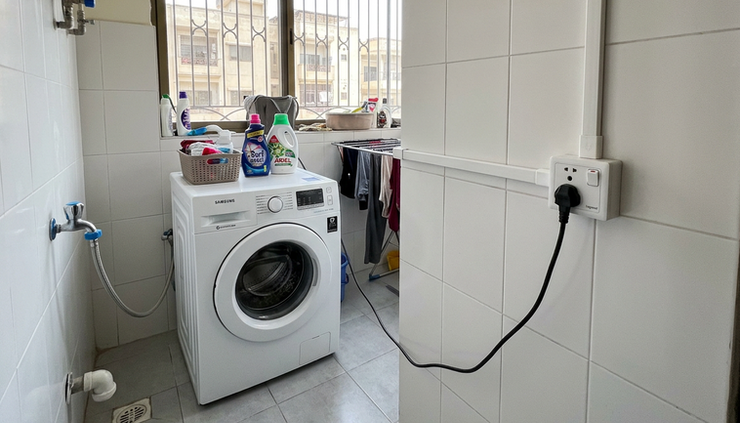
What a safe installation should include
A good electrician does more than attach a socket. The full setup should be checked from supply to final point.
Site inspection comes first
The electrician should inspect:
Existing distribution board condition
Available breaker space
Current load on nearby circuits
Washing machine location
Distance from supply to machine
Moisture or water splash risk
Earthing availability
Condition of existing wiring
This step matters because every home is different. A ground floor house, a flat, an upper portion, and a small rented unit may all need different routing.
Correct cable and protection
The cable should match the expected load and route length. The breaker should also match the cable and appliance requirements. Using a bigger breaker on weak wiring is unsafe because it may allow the wire to overheat before the breaker trips.
A qualified electrician should select the correct rating based on site conditions, not on guesswork.
Proper earthing
Earthing should be checked, not assumed. Many sockets have three-pin holes, but the earth point may be disconnected, weak, or missing.
A proper test helps confirm whether the earth connection is effective. If earthing is poor, it should be corrected before using the washing machine on that point.
Safe socket placement
The socket should be easy to reach but away from direct water splash. It should not be placed low on the floor where water can collect. In tight laundry areas, the socket height and machine position should be planned carefully.
A socket behind the machine may look neat, but it can be hard to reach in an emergency. A side placement is often more practical.
Neat conduit routing
Loose hanging wires are unsafe and untidy. Conduit protects wiring from damage and makes the installation look cleaner. It also helps keep the wire route clear for future repairs.
Final testing
Before handing over the job, the electrician should test the point. This includes checking voltage, polarity, earthing, socket grip, and breaker operation. The washing machine should be run briefly to confirm the point works under load.
Common mistakes to avoid
Many electrical problems start with small shortcuts. Avoid these common mistakes when setting up a washing machine point.
Do not use a cheap extension board permanently. Extension boards are useful for light-duty temporary use, not as a permanent heavy appliance solution.
Do not remove the earth pin from the plug. Some people do this to fit a plug into an unsuitable socket. It removes an important safety feature.
Do not ignore mild shocks. A light tingling feeling from the machine body can point to leakage or earthing trouble.
Do not keep using a burnt socket. Once a socket has heat marks, it should be inspected and replaced if needed.
Do not connect multiple heavy appliances to one point. A washing machine, dryer, iron, and water motor should not all depend on one weak board.
Do not let water pipes and wiring mix carelessly. The route should keep electrical points protected from splashes, leaks, and damp walls.
A safe job may cost more than a quick temporary fix, but it reduces repeat visits, damaged boards, and appliance risk.
When to call LahoreFix.com
Call an electrician if the washing machine socket heats up, the board burns, the breaker trips, the machine gives shock, or the laundry area has no proper dedicated point.
LahoreFix.com can provide a separate washing machine point, check earthing, inspect the existing board, and install safer wiring for the appliance. To book help, contact LahoreFix.com at 0305-1717571 and explain the issue clearly. Mention whether the socket is heating, tripping, sparking, or giving shock.
Before the visit, keep the area clear if possible. Move detergent bottles, buckets, and loose items away from the machine. If there is burning smell or visible damage, switch off the related breaker and avoid using the point.
Good information helps the electrician arrive prepared with the right tools and material.
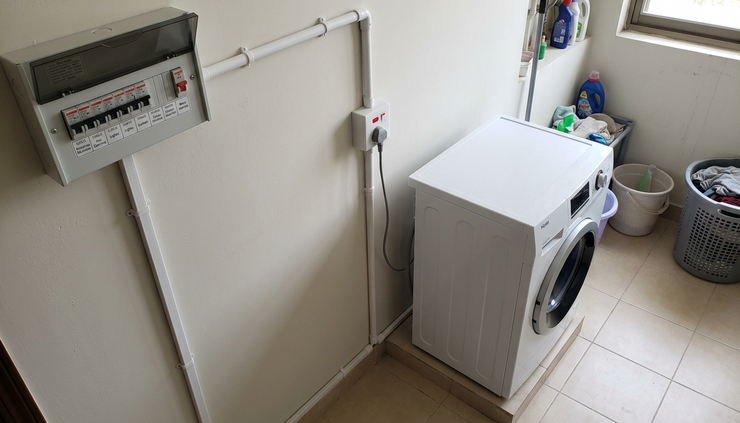
Final safety takeaway
A washing machine should not depend on a weak shared socket, loose board, or low-quality extension lead. It needs wiring that can handle the load, a socket that grips properly, earthing that works, and protection that responds when something goes wrong.
If the board gets hot, the plug turns black, or the machine gives even a small shock, treat it as a warning. Switch off the point and get it checked.
For a safer washing machine connection in Lahore, choose a dedicated point installed with proper earthing, clean routing, and careful testing. A small wiring upgrade can prevent a much bigger electrical problem later.
Comments