Lightning Protection System Installation in Lahore by LahoreFix

A lightning strike lasts less than a second, but the damage can stay for years. It can burn wiring, destroy appliances, damage solar inverters, crack concrete, and put people at risk. In Lahore, where many homes, plazas, factories, schools, mosques, and farmhouses now use taller structures and roof equipment, a proper lightning protection system is no longer a luxury.
LahoreFix installs lightning arresters, down conductors, and earthing bores for buildings that need safer discharge of lightning current into the ground. The goal is simple: guide the strike away from people, electrical wiring, and sensitive equipment.
A good system is not just a metal rod on the roof. It needs the right height, correct placement, strong cable, safe routing, proper joints, and a tested earth connection. If one part is weak, the whole system becomes unreliable.
For inspection or installation in Lahore, call 03051717571.
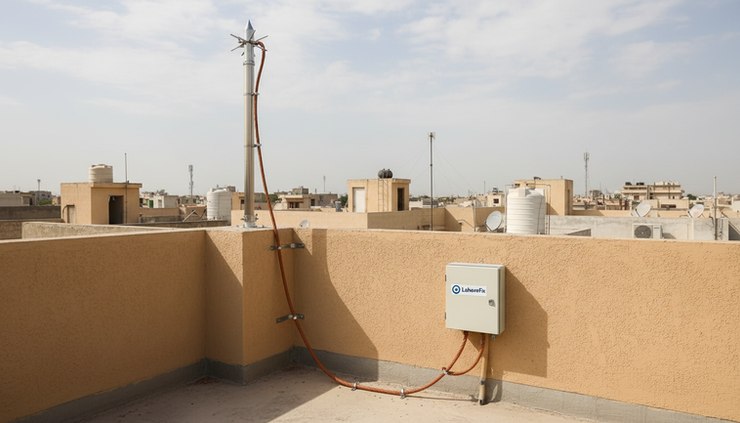
Why Lightning Protection is Must for High Buildings in Lahore?
High buildings are more exposed to lightning because they stand above nearby structures, trees, and boundary walls. A tall roof becomes a likely strike point, especially when it has metal tanks, solar panels, antennas, lift rooms, CCTV poles, or steel railings.
Lahore has many building types where lightning protection makes practical sense:
Multi-storey homes and corner houses
Commercial plazas and shops
Schools, colleges, and academies
Mosques with high minarets
Warehouses and factories
Farmhouses with open surroundings
Buildings with solar systems
Rooftops with telecom or CCTV poles
Lightning looks for a path to the ground. If a safe path is not provided, it may travel through electrical wiring, plumbing, steel reinforcement, internet cables, or appliances. That creates risk for both the building and the people inside it.
A properly installed system gives lightning a controlled route. The arrester catches the strike, the conductor carries the heavy current down, and the earthing system releases it into the soil.
That is the main purpose of Lightning Protection Lahore services by LahoreFix: reduce the chance of fire, equipment loss, structural damage, and dangerous side flashes.
What a Complete Lightning Protection System Includes
Many people think lightning protection means installing one rod on the highest point of the roof. That is only one part of the work. A complete system has several connected parts, and every part must be installed with care.
Air terminal or lightning arrester
The air terminal is the visible rod or arrester placed on the roof. Its job is to become the preferred strike point. It must be positioned where it can protect the required roof area.
For a small home, one well-placed arrester may be enough. For a larger building, more than one point may be needed. Roof shape, height, surrounding buildings, and equipment on the roof all matter.
Down conductor
The down conductor carries lightning current from the arrester to the earth. It may be copper tape, copper cable, GI strip, or another suitable conductor, depending on the project requirement.
The conductor should not take unnecessary sharp bends. It should follow a short and safe route to the earth pit or bore. Poor routing can increase risk because lightning current does not behave like normal household electricity.
Earthing bore or earth pit
The earthing system is the exit point. It allows lightning current to move into the ground. For Lahore’s soil conditions, an earthing bore is commonly used where better depth and moisture contact are needed.
A weak earth connection can make the arrester system ineffective. That is why earthing is not an optional add-on. It is the base of the whole safety system.
Clamps, joints, and testing points
A system is only as strong as its connections. Loose clamps, rusted joints, and poor contact can create heat and failure during a strike. Proper installation includes secure joints, weather-resistant fittings, and accessible testing points where needed.
LahoreFix checks the site before installation so the team can plan the roof point, conductor path, and earth location in a practical way.
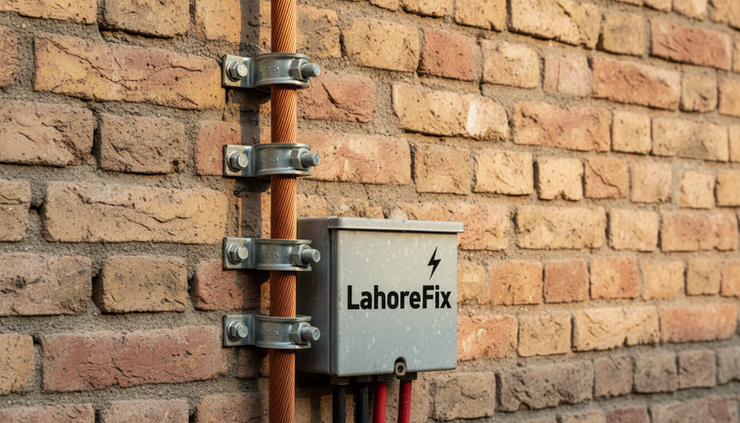
Cost of Lightning Arrester with Earthing Bore in Lahore
The cost of a lightning arrester with earthing bore in Lahore is not the same for every building. A small double-storey home, a mosque minaret, and a commercial plaza need different material quantities and installation methods.
A proper quote usually depends on these points:
Building height and roof size
Number of arresters required
Type of conductor used
Copper or GI earthing choice
Depth and method of earthing bore
Distance from roof arrester to earth point
Number of clamps, joints, and supports
Ease of access to the roof and walls
Need to protect solar panels or other rooftop systems
A low-cost installation may look attractive, but lightning protection is a safety system. Thin cable, weak clamps, shallow earthing, and careless joints can fail when they are needed most.
The better approach is to get a site-based estimate. LahoreFix can inspect the building, explain the material options, and suggest a system that fits the structure instead of giving a one-size-fits-all answer.
For pricing, call 03051717571 and share the building type, floors, location, and whether the roof has solar panels, water tanks, or high metal structures.
Copper vs GI Earthing for Lightning
Both copper and GI are used in earthing work, but they are not equal in every situation. The right choice depends on budget, soil condition, expected life, and the level of protection required.
Copper is usually preferred for better conductivity and long service life. GI can be more economical and still useful when installed correctly, but it may not offer the same resistance to corrosion as copper in many conditions.
Material | Main benefit | Common concern | Best use |
Copper | Excellent conductivity and longer life | Higher upfront cost | Homes, buildings with solar systems, sensitive equipment, and high-value properties |
GI | Lower material cost | Can corrode faster in some soil conditions | Budget-focused projects where proper sizing and maintenance are planned |
Mixed system | Can balance cost and performance | Must be joined correctly to avoid weak contact | Sites where design needs both practicality and safety |
Copper earthing often gives better long-term value because it handles current well and resists corrosion better. That matters for lightning protection because the system may sit quietly for years, then suddenly has to carry a very high current.
GI earthing can work when the design, depth, conductor size, and connections are suitable. The risk comes when low-grade material is used to reduce cost. A cheap strip, poor joint, or shallow bore can become a weak point.
The best decision is not only “copper or GI”. The real question is whether the whole route from arrester to soil has low resistance, strong bonding, and weather-safe installation.
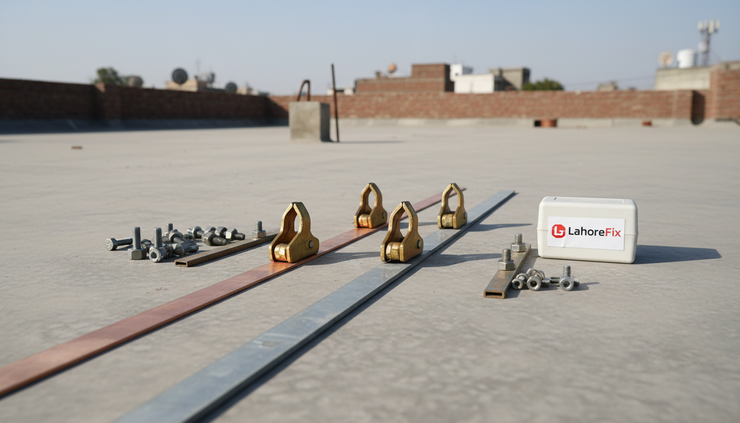
Why Earthing Bore Quality Matters
Earthing is where many bad installations fail. A rod on the roof may look impressive, but without a good earth path, lightning current can search for another route. That other route may be through wiring, pipes, solar equipment, or building steel.
A proper earthing bore should aim for reliable soil contact and safe discharge. The installer must consider moisture, soil type, depth, and connection quality. The earth wire should connect firmly with the electrode or plate. The joint should be protected so it does not loosen or corrode quickly.
In Lahore, some areas have soil that can dry out, especially around paved properties. Dry soil can increase resistance. This is one reason a professional site check matters before deciding the earthing method.
Good earthing also supports other electrical safety needs. It can help reduce shock risk and support surge protection when the system is designed properly. For lightning, it plays an even bigger role because the current is sudden and powerful.
Signs Your Building Needs Lightning Protection
Not every building has the same risk, but several signs suggest a lightning protection system should be seriously considered.
Your building may need one if:
It is taller than nearby houses or shops
It stands in an open area
It has a flat roof with metal water tanks
It has solar panels or a solar inverter system
It has CCTV poles, internet towers, or antennas
It has a lift room, mumty, minaret, or high rooftop structure
It stores valuable equipment, machinery, or stock
It has suffered appliance damage during storms before
Solar systems deserve special attention. Panels and mounting frames sit on the roof, usually exposed and connected to inverters and indoor wiring. A lightning protection system, along with suitable surge protection, can reduce the risk of expensive damage.
Mosques, schools, factories, and commercial buildings should also avoid casual installation. These buildings serve many people, so safety planning should be more careful.
How LahoreFix Installs a Lightning Protection System
A safe installation begins with the building, not the product. LahoreFix checks the structure first and then plans the system based on the site.
The usual process includes:
Site inspection
The roof height, access points, nearby structures, and electrical equipment are reviewed.
Protection point planning
The installer decides where the arrester should be placed for effective coverage.
Down conductor route
A safe and practical path is selected from the roof to the earth point.
Earthing bore installation
The bore or earth pit is prepared based on the site need and material choice.
Clamping and bonding
Cables, strips, joints, and clamps are fixed properly to avoid loose contact.
Final check
The complete route is checked so the system has a continuous path from arrester to ground.
A neat installation is not just about appearance. Straight routing, strong fixing, and protected joints help the system last longer and reduce maintenance issues.
Common Installation Mistakes to Avoid
Lightning protection work should not be treated like ordinary wiring. Some shortcuts can make the system unsafe.
Common mistakes include:
Using a thin wire that is not suitable for lightning current
Placing the arrester too low or in the wrong location
Making sharp bends in the down conductor
Leaving joints exposed to rain and corrosion
Connecting to weak or shallow earthing
Ignoring solar panels and rooftop metal frames
Installing without checking the building layout
Using mixed metals carelessly without proper connection
A building owner may not notice these problems after installation because the system still “looks complete”. The real test comes during a storm. That is why professional installation matters.
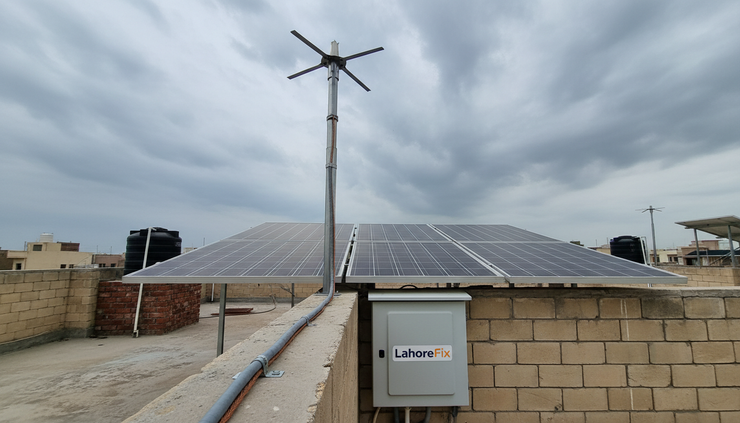
Maintenance After Installation
A lightning protection system should be checked from time to time, especially before and after the rainy season. Weather, dust, rust, construction work, and roof repairs can affect the system.
Basic maintenance includes checking:
Loose clamps
Damaged or cut earthing wire
Rust on joints and support points
Broken insulation or protective covering
Physical damage after roof work
Earth connection condition
Any change in rooftop equipment
If solar panels, antennas, or CCTV poles are added later, the lightning system may need adjustment. A building changes over time, and the protection system should still match the roof layout.
Install with LahoreFix at 03051717571
LahoreFix provides lightning arrester and earthing bore installation for homes, plazas, factories, schools, mosques, warehouses, and buildings with solar systems. The team can inspect the site, recommend copper or GI options, and install a safe route from the rooftop arrester to the earthing system.
Call 03051717571 for lightning protection system installation in Lahore.
A strong system protects more than appliances. It protects people, property, and peace of mind during severe weather. If the building is tall, exposed, or fitted with costly rooftop equipment, get it checked before the next storm season.

Comments