Solar Load Calculation in Lahore for AC, UPS and Solar Systems

A solar system that is guessed instead of calculated usually fails at the worst time. The AC trips. The UPS drains too fast. The inverter shows overload. In Lahore, where summer heat, load shedding, low voltage and heavy home appliances all meet, a correct home electrical load calculation is not optional.
A proper Solar Load Calculation tells you three practical things:
How much power your home uses at one time
What size solar inverter and panels you need
Which cable, breaker and battery setup can safely carry the load
LahoreFix helps homeowners calculate AC, UPS and solar load before installation, upgrade or repair. For a free load check, call 03051717571.
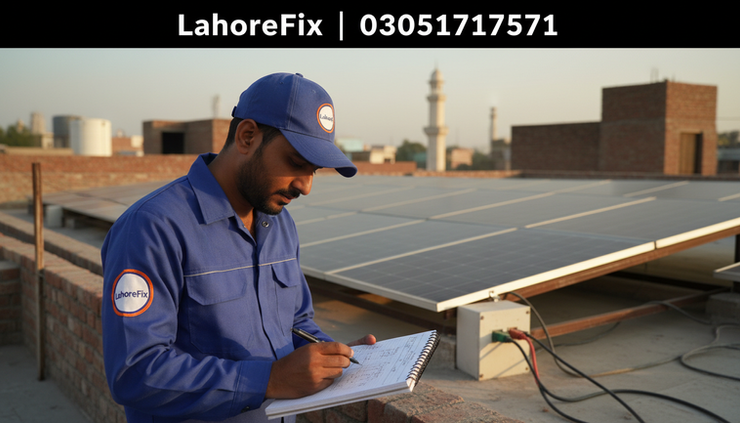
Home electrical load calculation in Lahore by LahoreFix
Home electrical load means the total power used by appliances, lights, fans, AC units, pumps, refrigerators and other devices. It is measured in watts or kilowatts.
Many homes in Lahore have grown their electrical load over time. A family may start with fans, lights and a fridge, then add an inverter AC, water dispenser, microwave, washing machine, deep freezer and UPS. The old wiring or inverter may still be there, but the load has changed.
That is where problems start.
Common signs of wrong load calculation include:
Breakers trip when the AC starts
UPS backup time is much lower than expected
Solar inverter gives overload warning
Wires heat up during peak loads
Lights flicker when a motor or compressor starts
Batteries drain quickly even after full charging
Solar panels produce power, but the home still depends too much on WAPDA
A load calculation does not mean adding every appliance blindly. It means checking which appliances run together, how long they run and how much power they draw.
For example, a microwave may use high power, but only for a few minutes. A fridge uses less running power, but runs many times during the day. An AC has both running load and starting load. These details matter.
Solar load calculation in Lahore for your home
Solar load calculation starts with a simple list of appliances. Each item needs its wattage and estimated daily usage. You can find the wattage on the appliance label, user manual or adapter. If the label shows amps instead of watts, the electrician can calculate it using voltage.
For Lahore homes, the most important loads are usually:
Inverter AC or split AC
Refrigerator and deep freezer
Ceiling fans
LED lights
Water pump
Washing machine
Iron
Microwave oven
UPS load
Wi-Fi router and small electronics
The goal is not only to size the panels. It is also to size the inverter and decide what should run on solar, what should run on UPS backup and what should stay on direct supply.
A good solar plan separates the home into sensible load groups.
Load group | Common appliances | Solar planning note |
Essential load | Fans, LED lights, fridge, router | Usually kept on solar and backup |
Comfort load | AC, water dispenser, TV | Can run on solar if system size allows |
Heavy load | Iron, microwave, pump, washing machine | Needs careful timing and breaker planning |
Backup load | Selected lights, fans, router | Should match UPS or battery capacity |
If everything is connected without planning, the system may work for a few days and then start giving errors during peak use.
Solar load calculation formula for watts to kilowatts
The basic formula is simple:
`Kilowatts = Watts ÷ 1,000`
So:
500 watts = 0.5 kW
1,000 watts = 1 kW
1,500 watts = 1.5 kW
3,000 watts = 3 kW
For current in amps, electricians often use:
`Amps = Watts ÷ Voltage`
In Pakistan, the standard single-phase home voltage is around 230 V, though actual voltage may rise or fall. For example:
`2,000 watts ÷ 230 volts = about 8.7 amps`
This helps in choosing cable size, breaker rating and inverter capacity. The calculation should also allow for safety margin, voltage drop and starting load.
Example solar load calculation for a 3 kW system
A 3 kW solar system does not mean every 3 kW appliance should run at the same time without thought. In real use, inverter capacity, panel output, battery position, sunlight and wiring quality all affect performance.
Here is a simple example for a small Lahore home during daytime use.
Appliance | Quantity | Approx. watts each | Total watts |
Ceiling fans | 4 | 80 W | 320 W |
LED lights | 8 | 12 W | 96 W |
Refrigerator | 1 | 200 W | 200 W |
Wi-Fi router | 1 | 15 W | 15 W |
TV | 1 | 120 W | 120 W |
Inverter AC | 1 | 1,300 W | 1,300 W |
Miscellaneous small load | 1 | 200 W | 200 W |
Total running load:
`320 + 96 + 200 + 15 + 120 + 1,300 + 200 = 2,251 watts`
That is about:
`2,251 ÷ 1,000 = 2.25 kW`
On paper, this can fit under 3 kW. But the installer must still check:
AC starting behaviour
Fridge compressor cycling
Solar inverter surge capacity
Battery charging load
Cable length and voltage drop
Whether the AC is inverter or non-inverter
Whether the system is hybrid, on-grid or off-grid
A safe design usually leaves margin instead of running the inverter at its limit all day.
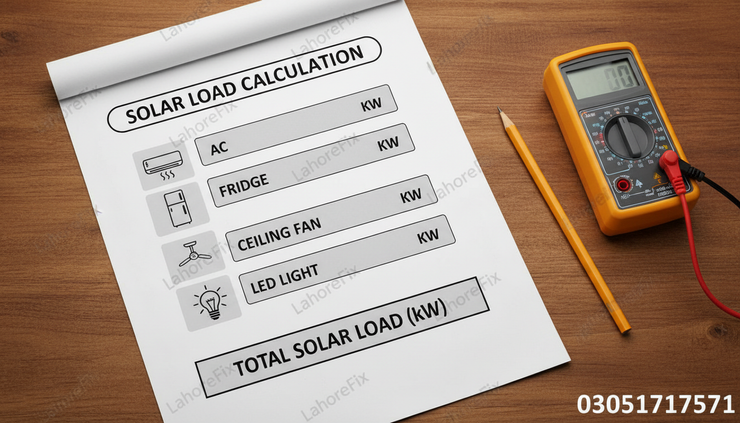
AC and UPS load calculation method
AC and UPS loads need special attention because they behave differently.
An AC has a compressor, fan motor and electronic controls. Its power use changes with temperature, room size, insulation, thermostat setting and whether it is inverter or non-inverter. A UPS has inverter losses, battery limits and surge limits. If the load is too high, it may trip or drain batteries quickly.
When LahoreFix checks AC and UPS load, the calculation usually includes:
Running watts of AC
Starting current or surge load
Number of hours used
Battery ampere-hour rating
UPS inverter capacity
Type of battery, such as tubular, dry or lithium
Existing wiring and breaker condition
Which rooms need backup
A common mistake is to connect the whole house to a UPS and expect long backup. A better method is to keep only selected loads on backup.
For example, a practical UPS backup load may include:
2 to 4 fans
4 to 8 LED lights
Wi-Fi router
One TV if needed
Phone chargers
Heavy appliances should be avoided on a normal home UPS unless the system is designed for them. This includes AC, iron, microwave, water pump and washing machine.
Load calculation for a 1.5 ton AC
A 1.5 ton AC is one of the biggest regular loads in a Lahore home. Its actual power use varies by model and condition.
As a broad guide:
AC type | Typical running load range | Planning note |
1.5 ton inverter AC | Around 1,200 W to 1,800 W | Load changes as cooling demand changes |
1.5 ton non-inverter AC | Often higher during compressor start | Needs more surge allowance |
Old or poorly serviced AC | Can draw more power | Cleaning, gas level and capacitor condition matter |
These are general ranges, not a replacement for checking the nameplate and live current. A clamp meter reading gives a clearer picture.
For solar planning, a 1.5 ton inverter AC may work well during sunny hours if the system is sized correctly. But if you add fans, fridge, pump and battery charging at the same time, the inverter may come under stress.
For UPS planning, running a 1.5 ton AC is usually not practical on a standard small UPS. It needs a high-capacity inverter and suitable battery bank. Otherwise, backup time will be very short and the system may overload.
A simple AC load example
Assume one inverter AC uses about 1,500 W while running. Add common room load:
Appliance | Approx. watts |
1.5 ton inverter AC | 1,500 W |
2 fans | 160 W |
4 LED lights | 48 W |
TV | 120 W |
Router | 15 W |
Total:
`1,500 + 160 + 48 + 120 + 15 = 1,843 watts`
That is about 1.84 kW for one room zone. If another AC starts, the load can cross the capacity of a small inverter quickly.
This is why room-wise load planning works better than whole-house guessing.
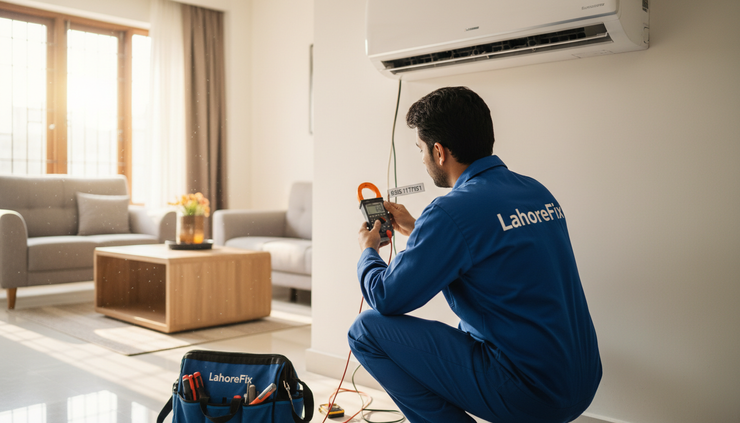
Cable and breaker size guide for solar and backup systems
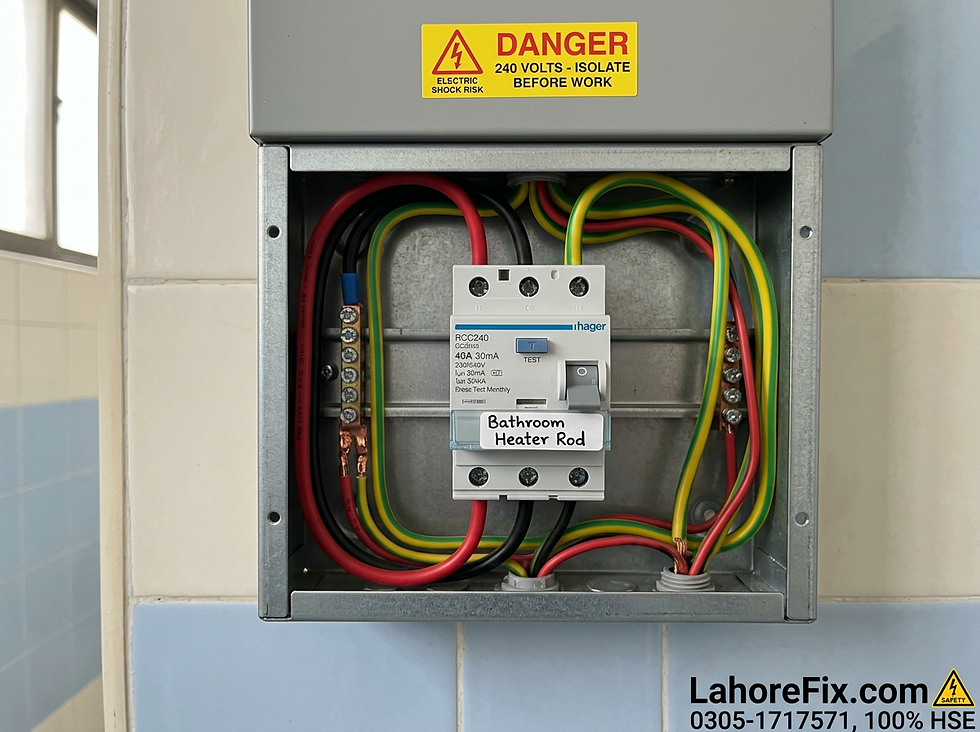
Cable and breaker sizing is about safety as much as performance. If the cable is too thin for the load, it can heat up. If the breaker is too large for the cable, it may not trip when it should. If the breaker is too small, it will trip even during normal use.
The right size depends on current, cable length, installation method, insulation type, ambient temperature and whether the load is continuous. Solar DC wiring also has its own requirements and should be handled carefully.
Here is a simple planning guide, not a final installation chart.
Item to check | Why it matters |
Total load in watts | Shows how much power the circuit must carry |
Current in amps | Helps select cable and breaker rating |
Cable length | Long cable runs can cause voltage drop |
AC or DC side | Solar DC cables need proper rating and connectors |
Earthing | Reduces shock risk and supports protection devices |
Breaker type | AC and DC breakers are not the same |
Load type | Motors and compressors need surge allowance |
For example, a 3 kW single-phase AC load at 230 V draws around 13 amps before losses and margins:
`3,000 ÷ 230 = about 13 amps`
That does not mean any random 13 amp setup is enough. The electrician must add margin and check the cable route, breaker type and load behaviour.
Common breaker and wiring mistakes
Many overload problems come from small mistakes that look harmless at first.
Avoid these mistakes:
Using low-quality cable with unclear copper content
Mixing solar DC and AC wiring without proper separation
Installing a breaker with the wrong rating
Using AC breakers on DC solar strings
Skipping earthing and surge protection
Joining wires loosely with tape
Running high-load appliances on weak extension boards
Connecting the whole home to UPS without load separation
Good wiring may not look exciting, but it protects your inverter, batteries, appliances and family.
If a wire heats, a breaker trips repeatedly or the inverter shows overload, do not keep resetting it. Find the load or wiring fault first.
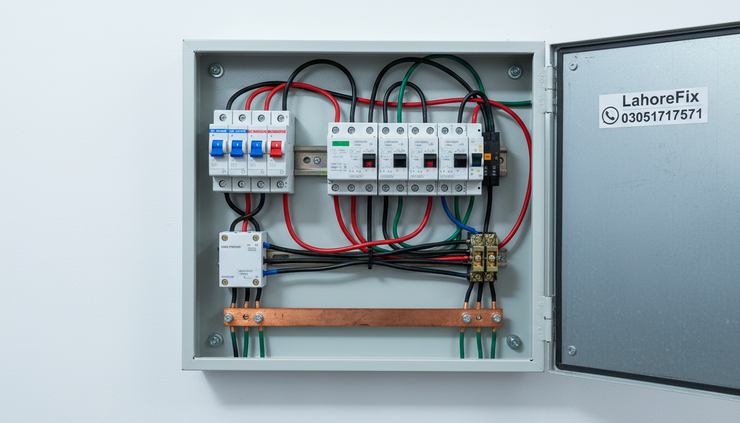
Free solar load calculation by LahoreFix at 03051717571
A proper load calculation saves money because it prevents wrong purchases. An undersized system overloads. An oversized system costs more than needed. A mismatched UPS gives poor backup. Weak wiring can damage equipment.
LahoreFix can help calculate:
Home electrical load
AC load for solar operation
UPS backup load
Battery capacity requirement
Solar inverter size
Cable and breaker planning
Load separation for rooms and floors
Upgrade needs before solar installation
Before calling, keep a basic list ready:
Number of AC units and tonnage
Number of fans and lights
Refrigerator and freezer count
UPS size and battery details
Solar system size if already installed
Main breaker rating if known
Main issue, such as tripping, low backup or overload
You do not need perfect information. A trained electrician can check the missing details with instruments and appliance labels.
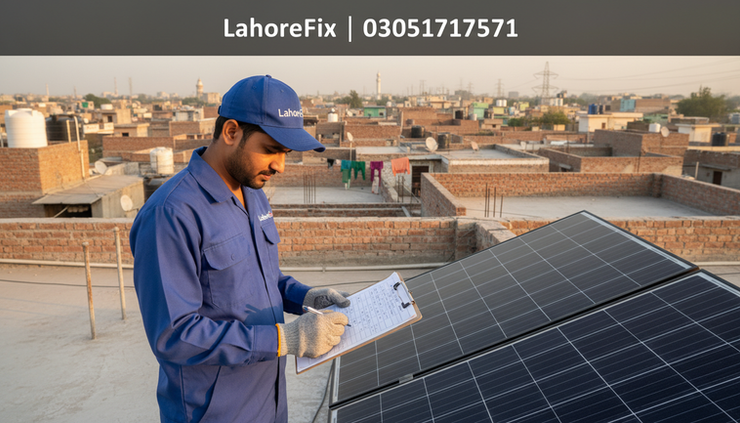
A safe solar and UPS setup starts with one honest number: your real load. Once that is clear, inverter size, panel capacity, battery backup, cable size and breaker rating become easier to plan.
For AC, UPS and solar load calculation in Lahore, contact LahoreFix at 03051717571 and get your home load checked before overload turns into damage.

Comments